
Get Comfortable being Uncomfortable
Learning painting as a beginner, acknowledging discomfort, planning a new challenge

Hey friends!
I couldn’t turn on my iPad yesterday, and a thought suddenly came to mind: What if the world ran out of electricity and there’s no access to technology? Would I still be able to draw? Would I still be able to make a living with my hands?
That moment made me want to learn how to paint with traditional materials. I know the reason sounds a bit silly, but at least it got me started!
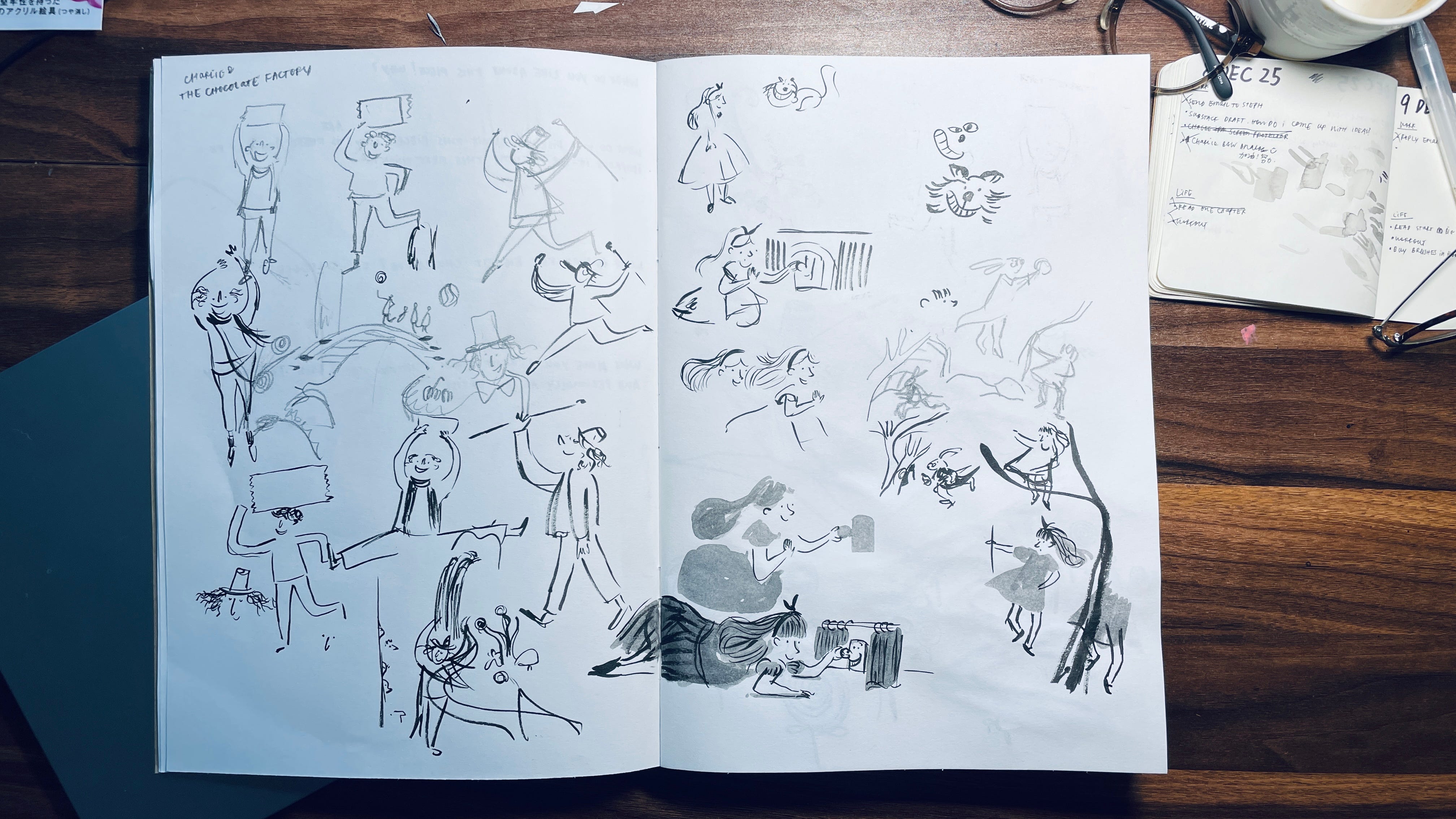
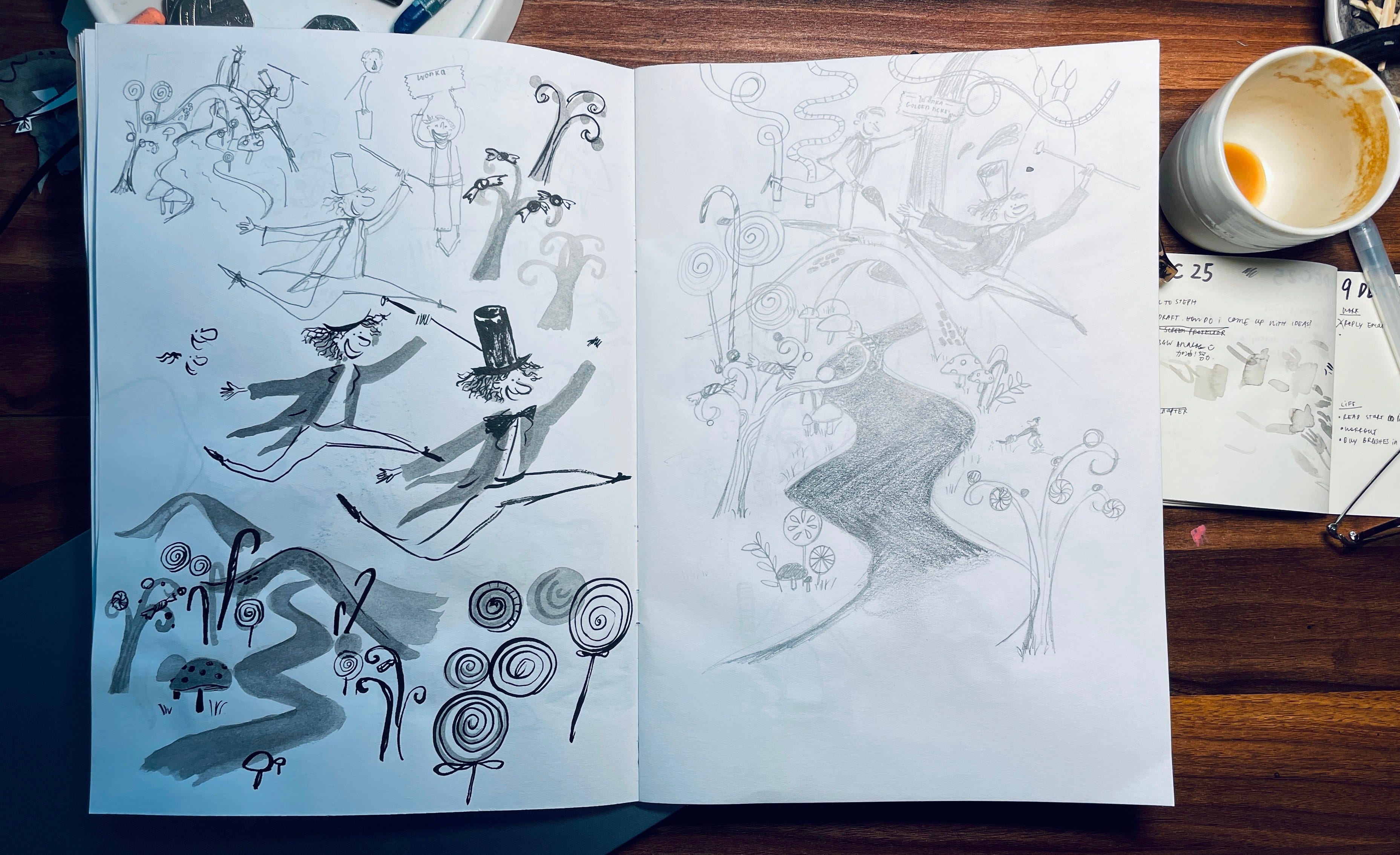
To lower the pressure, I decided to use materials that I’m familiar with—ink wash. I always do life sketching with analog materials, but I never finish a painting without touching up digitally.
I sketched out my ideas on my sketchbook, worked out the thumbnails and sketch. And I redrew the sketch in Procreate—yes, I didn’t had the patience—and printed the sketch out again. With the help of light box, I roughly transferred the sketch to my fancy hot press paper and I was ready to paint!
After 20 minutes, I sat in front of my desk, staring at that fancy paper with ugly blobs of ink washes. Crap. This looked hideous. It still is. My mind went blank. What should I do now? Should I start over or should I go back to my iPad.
I truly admire artists who create with traditional materials only. I have no idea how could they do everything without the undo button? From sketching, transferring sketches, painting, waiting the paint to dry and adding final details. All of these processes take double, or even triple, amount of time comparing to using digital tools.
I was sooooooo close to giving up. Phew! Luckily, I had enough brain power to force myself to keep working on it. I need to keep working on it even though I feel extremely uncomfortable. I have to keep painting even though the work in front of me looks absolutely terrible.
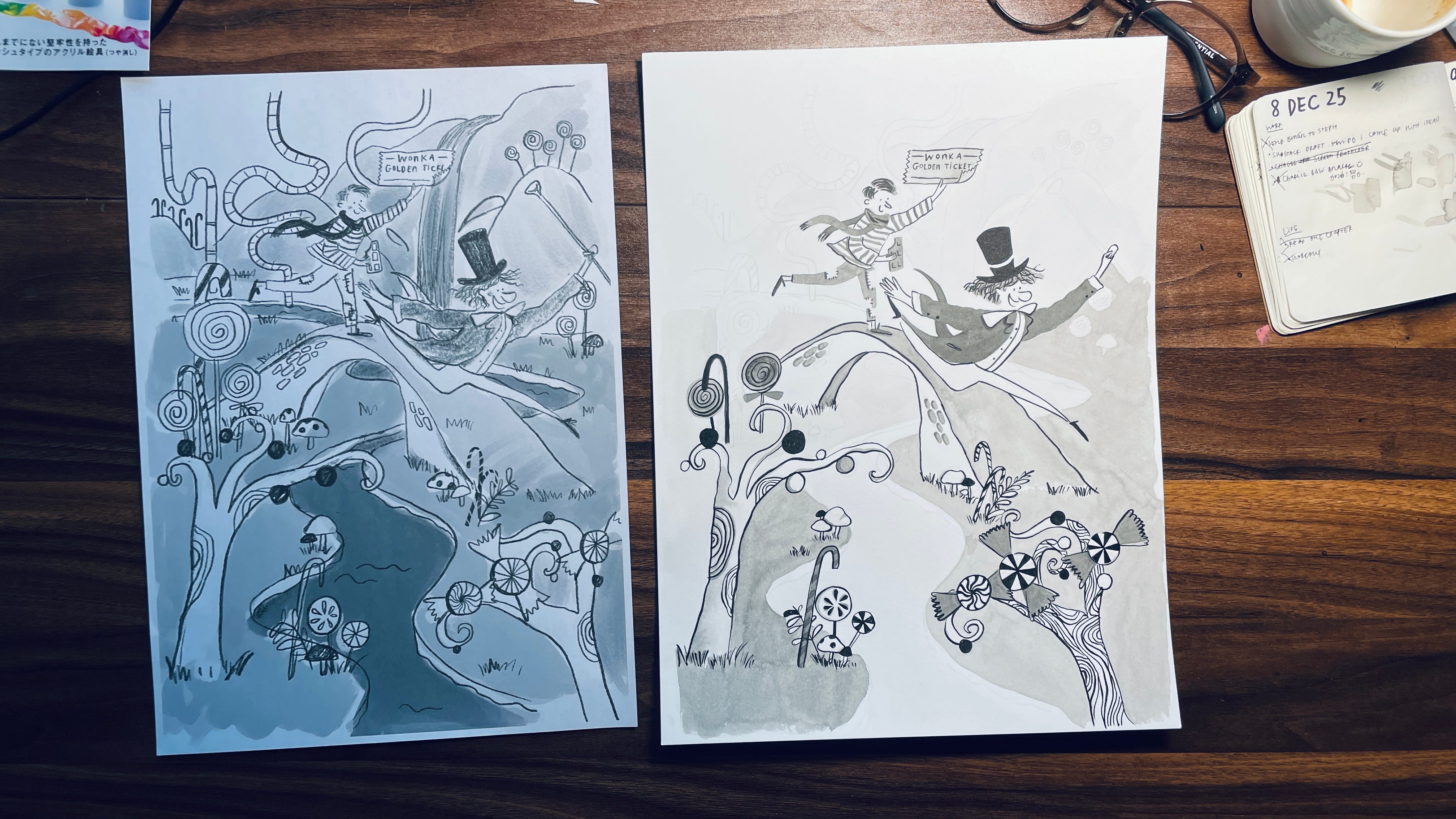
With digital tools, we can erase strokes and mistakes easily, and they don’t leave a single mark behind. That convenience has definitely fed into my perfectionism. Yes, I felt extremely uncomfortable when I saw those ugly blobs of ink wash and the overworked strokes on the tree trunk. But do I regret putting them there? Not at all. I’m glad I tried different approaches. Not only did I learn more about my artistic preferences and decision-making, I also learned more about myself.
Here’s the unfinished painting. Not super proud of it, but I’m proud of myself pushing it this far. I have realised, as a beginner, I focused on too many things at once—composition, value, materials, background(the very scary one!), characters—and ended up not focusing on nothing at all. I’m not going to keep work on this painting but I’m definitely not giving up. If anything, I’m giving it my all. After doing this exercise, I have a clearer sense of how to improve my painting skills.
I’m going to draft out a challenge for myself—focusing on the technique of using ink instead of the subject and composition. I will plan it out this week and keep you posted!
If you could only take one thing from this post, learn to get comfortable being uncomfortable.
Here’s what I do: When I feel uncomfortable, I stay still and take a deep breathe. Not fight against that feeling of discomfort but acknowledge the presence of it. I usually whisper to myself, "I know you feel uncomfortable now, and that’s okay. Your purpose is to learn to draw traditionally. These obstacles and challenges are necessary if you want to grow as an artist. You don’t have to create a masterpiece—you just need make the work and move on.”
I’m no expert but I share this experience with you anyway, because I know how frustrated and overwhelmed it is—sitting at your desk alone, and feeling completely lost. I just want to let you know, you are not alone:)
Get comfortable being uncomfortable.
Happy painting, my friends!
I apologise if there’s any grammatical, logical or slpeling mistakes because it’s written by me, a human being who makes mistakes.
Is this an age or a taught student thing?
I would always draw, scan the image and colour correct afterwards.
I saw pages of original Nemesis black and white comic artwork and the whole page had been cobbled together and splashed over with white out, then inked into. It was a revelation, your artwork does not have to be perfect. Pity I never took a photo of it.
Admittedly, I still have a print from my degree days that still haunts me as it never quite went the way I wanted. Some decades later, I saw a Paul Nash painting and saw the answer.....
Amber this is a great post about resilience and process. As a high school art teacher who grew up learning analog media first and then growing into digital tools I don’t have the same perspective as my students at times. I teach drawing and painting courses using both analog materials and a classroom set of iPad Pros with Procreate. It is fascinating to watch how each changes how students approach their work but also get stuck. This article has helped me see it even more and I may share it with my students. Thank you so much for sharing!